Diesel and gas generator set selection guide
Define the load, compare quotations on the same basis, and agree on acceptance criteria before ordering a generator set.
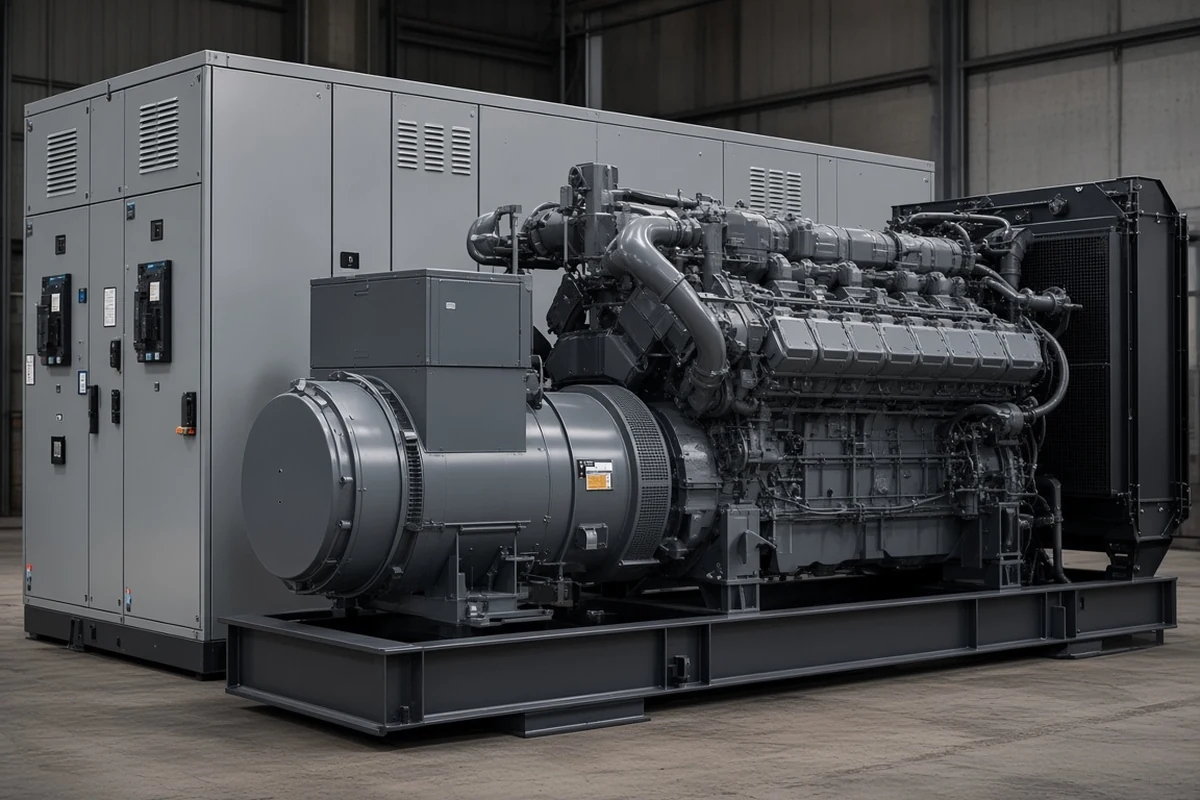
Four steps to specify a generator set
A 24-second silent overview with on-screen text and concept imagery. The four steps are also set out below.
1. Start with the load
- For backup power, list the loads that must stay online, the order they can reconnect, and how long they need to run.
- For regular operation, share the daily load profile and maintenance windows. Specify whether the set runs alone, in parallel with other sets, or with the grid.
- For data centers, industrial sites or remote facilities, include transfer requirements, sensitive loads, and redundancy needs.
2. Check fuel and site conditions
- For diesel, check fuel storage, replenishment, containment and operating hours.
- For pipeline or field gas, ask the supplier to assess composition, pressure and flow at the set inlet and identify any treatment required.
- Share altitude, temperature, dust or salt exposure, and installation footprint. Compare open, enclosed or containerized packages where appropriate, including ventilation and maintenance access.
3. Compare quotes line by line
- Ask for the exact set, engine, alternator and controller models. Compare electrical output at the same frequency, voltage, power factor, duty rating and site conditions.
- List what the price includes. Check controls, synchronization, transfer equipment, cooling, fuel treatment, exhaust, installation and commissioning.
- Request the emissions and other compliance documents that cover the quoted configuration and destination. Ask for written warranty terms, service coverage at the site, and spare-parts availability.
4. Agree how acceptance will work
- Agree on factory and site tests before purchase. Define the load steps, allowable voltage and frequency deviations, and how results will be recorded.
- Where applicable, include transfer, synchronization, protection and alarms. Agree who provides the load bank, fuel and test instruments.
- Request the agreed test records, wiring diagrams, operating manuals, training scope and maintenance schedule as part of handover.
What to send with an inquiry
- Company and project location, including the destination country.
- Required electrical output, voltage and frequency. If available, include a load profile, the largest motor or load step, and the planned operating hours.
- Available fuel. For gas, share the available pressure range and a recent gas analysis if available.
- Standby or regular operation, islanded or grid-tied, and any space, noise or permitting constraints.